
Artificial Intelligence
Future Telecoms
Quantum
Wise words and waggishness… September 2026
Reading time: 2 mins
Quantum is edging into data centres via security, as AI demand and sovereign control reshape how infrastructure is built and protected

Major shifts in digital infrastructure are often driven by external shocks. Think back to COVID-19, when Microsoft CEO Satya Nadella admitted during a 2020 earnings call that the company had seen “two years’ worth of digital transformation in two months.” Today, war in the Middle East is causing similar vibes around data centres. Long considered back-office infrastructure, they have become a focal point for economic growth, national security, and technological competitiveness. They have also become military targets, so unsurprisingly, governments are keen to wrap them in cotton wool – but also find new ways to make them more powerful, efficient, and local.
This desire is already translating into large-scale public and private investment. In February for example, French AI company Mistral announced plans to invest €14 billion in data centres in Sweden, underlining the scale of infrastructure now required to support AI development in Europe. In the UK, the government has already moved to strengthen the resilience of data centres through new protections against cyber attacks and power disruption, reflecting their growing status as critical national infrastructure. Across both public and private sectors, the focus is converging on securing capacity, energy supply, and long-term control over compute.
Much of this investment is being driven by AI, which is rapidly increasing demand for compute, power, and specialised infrastructure. Training and deploying large-scale models requires significantly higher energy density and tighter integration across systems, placing new strain on data centre design. At the same time, operators are trying to balance competing priorities – scaling capacity while managing energy use and maintaining control over critical infrastructure. From an investor perspective, this is already shaping how new technologies are adopted.
“We’re seeing a lot of investment in hybrid AI and quantum setups in HPC, and these will start delivering ROI before full quantum advantage is a reality,” says Tom Henriksson, general partner at OpenOcean.

That hybrid model is likely to define how quantum enters data centres.
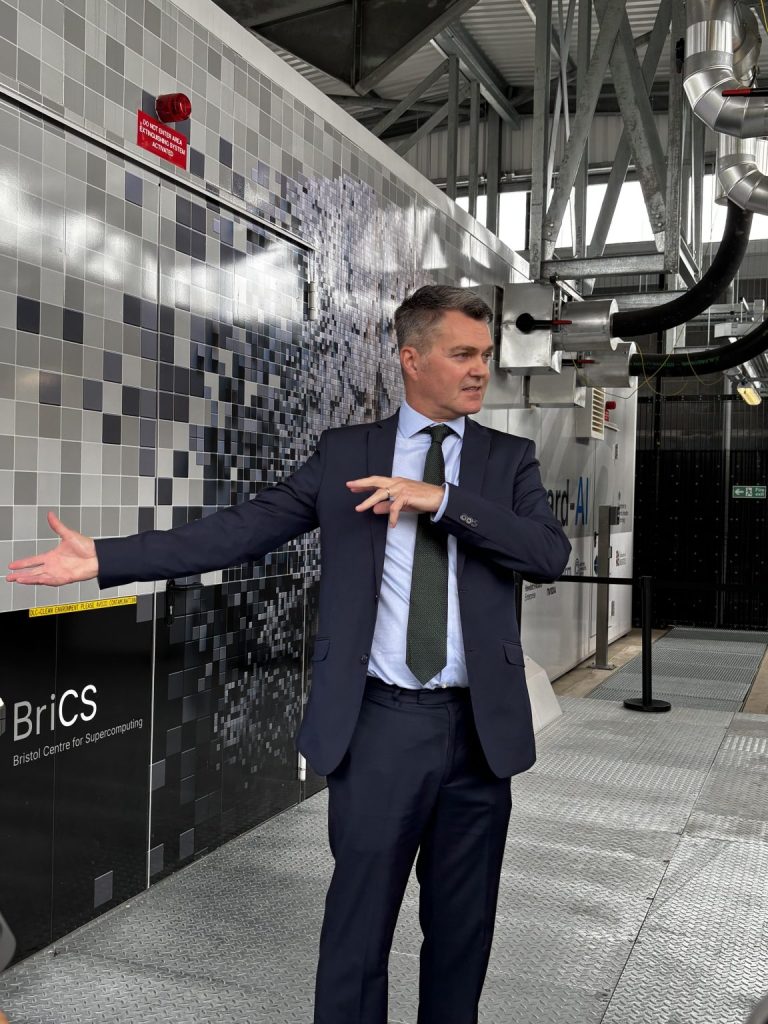
“Quantum computers are expected to augment rather than replace classic computing,” says Simon McIntosh-Smith, director of the Bristol Centre for Supercomputing. “It’s likely that quantum computers will be added into existing facilities.”
One company that is already doing this is Oxford Quantum Circuits (OQC). The company describes itself as a “quantum compute-as-a-service provider” and claims it is the only company deploying quantum systems into commercial data centres.
“Quantum is unlikely to drive the same kind of data centre infrastructure expansion that AI is currently causing,” says Simon Phillips, CTO at OQC. “In the near to medium term it will be a highly specialised capability that complements classical systems rather than replacing them.”
OQC has already deployed quantum systems inside colocation data centres in London, Tokyo, and New York, combining quantum processors with classical compute in hybrid workflows. It is an example of how quantum computing is being used to tackle a narrow set of computational problems where classical systems struggle, particularly in optimisation, simulation, and materials modelling.
“The real shift is less about building entirely new quantum campuses, and more about evolving advanced compute environments where quantum, AI and HPC systems operate together,” adds Phillips.
In practice, that means quantum is likely to appear as a targeted capability within existing environments, rather than a standalone platform. More part of a computational mix of tools than its own dedicated box.
“Quantum systems should be specialised equipment within existing data centres in the future,” says McIntosh-Smith. “Though they do have some unique needs that will require some adaptation.”
Quantum systems demand near absolute zero temperatures, minimal vibration, and highly controlled environments, introducing new layers of engineering complexity into facilities already under pressure from AI workloads. Even where quantum systems can deliver efficiency gains for specific tasks, that does not necessarily translate into lower overall energy demand.
“If a task can be performed by a quantum computer instead of a classical computer, it will likely take a lot less power to do it,” McIntosh-Smith says. “However, typically what then happens is that the available power gets used for something else.”
The result is that quantum is unlikely to ease the immediate pressures on data centre infrastructure. Instead, it adds a new layer of capability, and complexity, to systems that are already scaling rapidly.
“In the short term, the biggest opportunity isn’t simply hosting quantum hardware,” says Phillips. “The more immediate opportunity is in hybrid orchestration and security infrastructure.”
That reflects how quantum is likely to enter mainstream environments, through tighter integration with existing AI and HPC systems, and through changes to how data is secured. This sort of complexity is reflected in how early deployments are taking shape. Despite growing interest, quantum systems remain difficult to standardise and integrate into existing environments. Research from S&P Global notes that “every deployment involves bespoke, customised construction”, reflecting the wide variation in hardware approaches and infrastructure requirements.
As a result, quantum computing is still largely concentrated in specialised environments, often linked to research institutions, national laboratories, or hyperscale cloud providers, rather than widely distributed across commercial data centres. Early examples of deployment exist, but they remain limited and highly tailored.
This has implications for how quickly quantum can scale, and who controls access to it. Quantum may not yet be transforming data centre workloads, but it is already reshaping how those workloads are secured.
The same properties that make quantum computing powerful also threaten the cryptographic systems that underpin modern infrastructure. The growing concern is the so-called “harvest now, decrypt later” scenario, which has shifted quantum risk from a future problem to a present one, particularly for governments and operators managing sensitive or long-lived data.
As a result, quantum is entering the data centre through security before it arrives through compute.
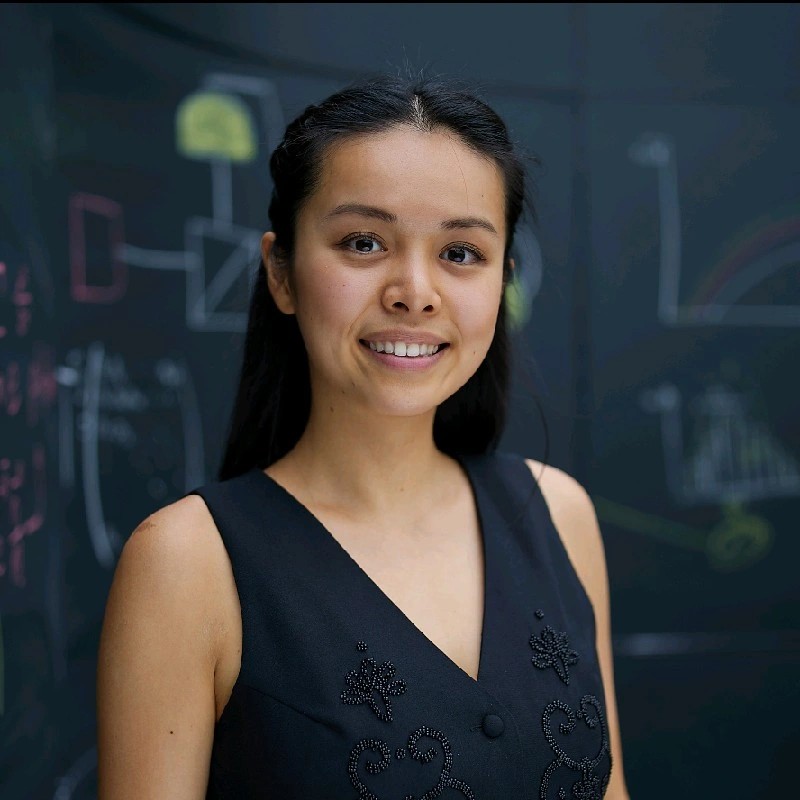
“Increasingly so,” says Wenmiao Yu, co-founder of Quantum Dice, when asked whether operators are taking quantum-safe security seriously. “We’re already seeing the rollout of hardware security modules that integrate Quantum Random Number Generators (QRNGs) and post-quantum cryptography (PQC), with examples including the Thales Luna HSM, Fortanix DSM, and Entrust systems.”
Unlike quantum processors, these technologies do not require entirely new facilities. Instead, they slot into existing infrastructure, embedded within servers, network hardware, and dedicated security systems.
“QRNGs can come in a range of different form factors suited to different parts of modern data centre infrastructure,” Yu says, pointing to deployments ranging from PCIe cards and embedded chips to rack-mounted systems and cloud-based entropy services.
This creates a different pathway for quantum adoption, one that is less about computational advantage and more about trust.
“Many commercially available security products already integrate quantum random number generation,” Yu adds, suggesting that quantum-derived entropy is already becoming part of mainstream infrastructure.
This move towards security also reflects a change in how governments view digital infrastructure. Data centres are now seen as strategic assets tied to national security, economic resilience, and technological independence. The UK’s government £2bn commitment to quantum technologies, alongside moves to classify data centres as critical national infrastructure, points to a sovereign strategy at a time of so much geopolitical uncertainty.
Similar patterns are emerging elsewhere. In Europe, projects such as France-backed AI infrastructure and wider EU investment in sovereign cloud point to a growing desire to retain control over compute and data. In the US, export controls on advanced chips and increased support for domestic semiconductor and compute infrastructure reflect a similar focus on securing critical technology supply chains.
Within that context, quantum technologies are seen as the next big thing and just about every state wants to get ahead of the game. Security is where this is most visible. As governments and operators reassess long-term risk, the integrity of cryptographic systems, and the entropy that underpins them, is moving higher up the agenda.
“Yes, particularly with increasing scrutiny on the validity and robustness of entropy sources,” says Yu. “High-quality entropy is critical.”
That focus on trust, rather than raw performance, may determine how quickly quantum technologies are adopted. The result is a split path. Large-scale quantum computing remains tied to longer-term breakthroughs and specialised environments. But quantum security is already being pulled into mainstream infrastructure, driven less by technical readiness than by policy, risk, and control.
Which brings us back to the original question. AI is forcing a rapid expansion of data centre capacity. Sovereign pressures are shaping how that capacity is built and secured. Together, they may not accelerate quantum advantage itself, but they are accelerating innovation and increasing the potential for quantum in data centres. Not as a replacement for classical systems, but as part of the infrastructure governments are no longer willing to leave to chance.
Working as a technology journalist and writer since 1989, Marc has written for a wide range of titles on technology, business, education, politics and sustainability, with work appearing in The Guardian, The Register, New Statesman, Computer Weekly and many more.