
Artificial Intelligence
Future Telecoms
Quantum
Wise words and waggishness… September 2026
Reading time: 2 mins
The multi-university research and development vehicle is focused on next generation networks, but it could turn out to be so much more than that

“AI is likely the most significant technology in human history,” said newly appointed Minister for Artificial Intelligence Kanishka Narayan back in July. He may be right, of course, but its true value will not be in isolation, but in how it is implemented and used in conjunction with other technologies.
Networks are one of the clearest examples of this. Managing a 5G or future network, such as 6G, mixes ground-based masts with satellite links, sharing spectrum dynamically between users. Handling a connection seamlessly is a huge coordination and complexity conundrum and one that AI is expected to help solve and manage.
It’s just one of a number of research and development challenges in future networks that JOINER (the Joint Open Infrastructure for Networks Research) was created to tackle. Launched in June last year, JOINER connects 15 universities and research centres, from Belfast to Glasgow, built around three existing Future Telecoms Hubs and a set of shared facilities. These include a National Spectrum Facility, a non-terrestrial network emulator that mimics satellite conditions without needing a satellite, and dedicated AI acceleration capacity.
“It’s not enough to simulate,” said Professor Simon Saunders, one of the researchers behind the project, speaking at the launch in Bristol last year. “We need full-stack, real-world scale.”

Saunders referred to JOINER as “layer zero”, the idea that it provided a basic but solid infrastructure foundation on which everything else in 5G and 6G research could be built and tested. According to Peter Marshall, the platform’s industry lead, that ambition still remains, but he says the roles and relationships within JOINER continue to evolve.
“I think ‘layer zero’ is still the right description, but we’ve moved well beyond laying the foundations. Over the past year we’ve established 15 nodes on the platform and, more importantly, we’ve started bringing researchers, industry, and government together around it. The focus has shifted from building the infrastructure to enabling experimentations and collaboration.”
It’s still early days, but a good example of this is how three universities are working together on how AI applies to future networks, each institution “using equivalent technology but contributing different areas of expertise” to a problem none could tackle alone, says Marshall.
JOINER also has its first international node, with Trinity College Dublin joining late last year and recently named as a key pillar of bilateral cooperation on future networks, 6G research and digital resilience, during the UK government’s landmark Memorandum of Understanding (MOU) with Ireland.
The key to JOINER is its accessibility, running on a mix of private cloud, public cloud, and dedicated hardware. Researchers request computing resources through a self-service portal, rather than going through months of procurement for each project. A team in Belfast can get access and start working alongside colleagues in Dublin or Glasgow within days, using the same infrastructure.
“It’s a sovereign capability,” says Simon Fletcher of Real Wireless, which advises on how industry can engage with the platform, “and the value should be captured in UK plc as much as possible. That’s the direction from the Research Council and from ministers.”
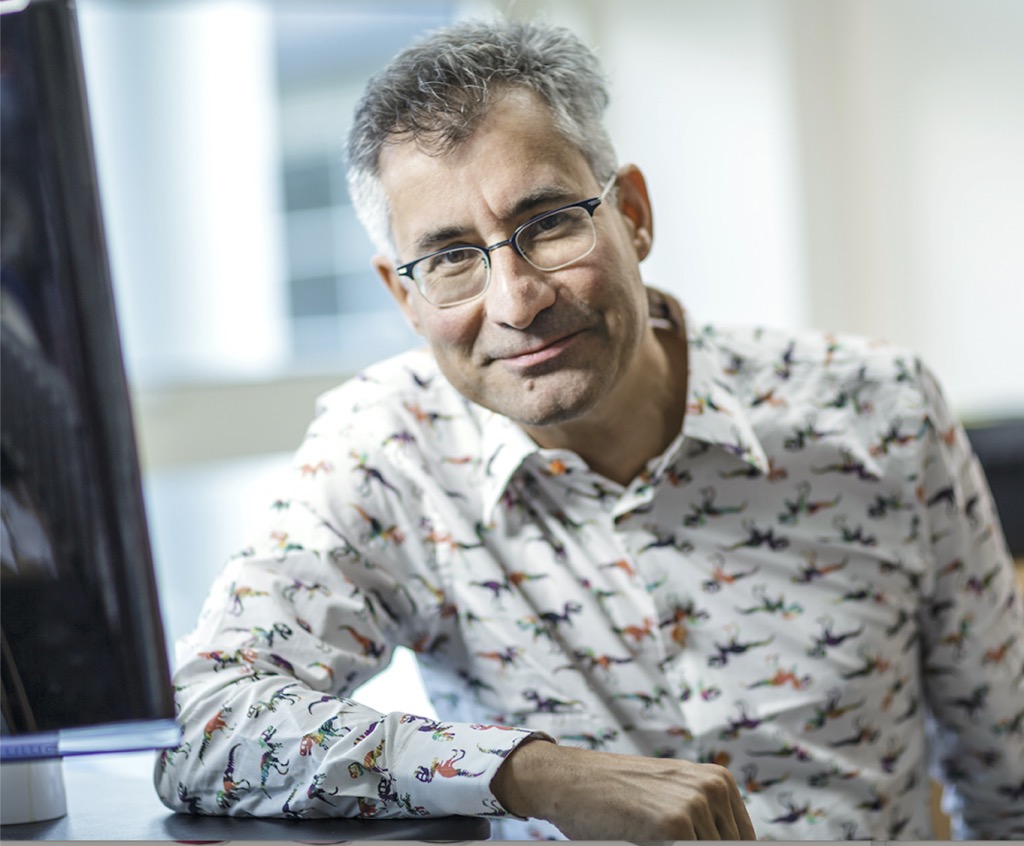
When CSA Catapult joined JOINER in February, it framed the move in the same terms, claiming it was building sovereign capability in AI-driven and quantum-secure telecoms, rather than simply adding another testing partner to the list.
“I’d say that was undeniably true,” says Rupert Baines, a non-executive director at CSA Catapult. “JOINER is exactly the kind of thing that aligns to national ambition, and by building UK-wide capabilities and connections it is helping sovereignty.”
However, Baines adds that sovereign capability is “very much more than shared infrastructure. It implies resilience, and sovereign supply chains, or at least supply resilience through friendly countries. Those are big, complicated, critically important ambitions that I’m not sure anyone is tackling.”
Sovereignty, for Fletcher, isn’t just about who owns the infrastructure, it’s about whether real products come out of it. He says “there are pathways to grow a spinout from it,” but a lot of the practical elements, such as who owns IP, are still being ironed out. However, he adds that “it’s very clear from the mandates of the project that the government expects we don’t just give away IP to whoever.”
Expectations are running high, but it is not just about start-ups. Existing industry is keen to see how JOINER develops and what role it can play in working with and benefiting from such a collaboration.
Magnus Frodigh, senior advisor, CTO office at Ericsson Research, says he is “very positive about JOINER” and that “if you have an arena where you’re showing things, building things, measuring on them, and interacting with partners, that’s generally a very good idea.”
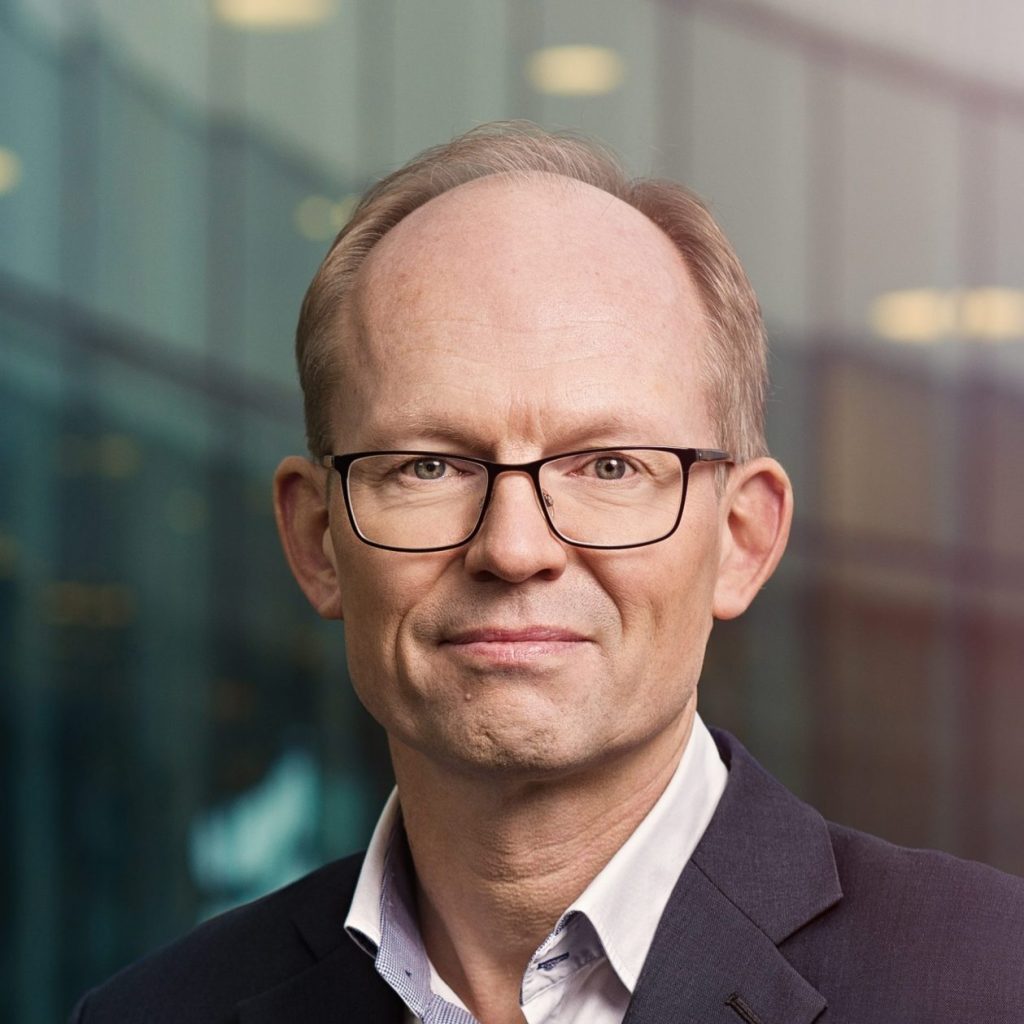
While Frodigh talks about the value to Ericsson of working on projects in an infrastructure such as JOINER, he was less optimistic about its potential role in helping to develop standards.
“It’s typically very unrealistic to believe that universities could play an active role in that standardisation,” he says. “I’m questioning this belief in federated hubs that they should write standardisation contributions, take patents on this, and be a player in this ecosystem. All of these things are extremely hard.”
Fletcher, comparing JOINER with earlier UK efforts, makes a related point about where its ambition should sit. JOINER has gone “much more into the technical domain” than anything before it, he says. He talks about the switching gear and the backbone between universities, and how building the infrastructure for countrywide collaboration is a different achievement to shaping how the rest of the world builds 6G.
So, what can be learned from JOINER? Is it a model for collaboration and innovation?
Baines has spent his career moving between semiconductors and telecoms, and doesn’t think the answer is the same for every sector.
“Telecoms does lend itself to that very nicely,” he says of the shared-infrastructure model behind JOINER, pointing to Digital Catapult’s SONIC Labs as a comparable precedent already running. “Semiconductors is much more competitive, and there is less scope for cooperation.”
Quantum, Baines thinks, certainly could work the same way, and there are joint initiatives already underway there, while Marshall suggests advanced manufacturing, which he says faces the same pressures that made JOINER possible – “an unprecedented speed of technology development, a need to work with others that have core skills and expertise, and a realisation of the value of combining technologies that once might have been seen as unrelated.”
What is less easy to replicate is the infrastructure-sharing logic itself. JOINER works because spectrum and satellite access are unusually centralised, regulated resources. Nobody can simply build their own. Most sectors don’t have an equivalent chokepoint.
So what does success look like for JOINER? Who you ask will determine what sort of answer you get. For Fletcher, it’s becoming a fixture of the European research network, not just a UK one. For Baines, it’s a step toward a sovereign capability that goes well beyond shared infrastructure. For Marshall, it’s the shift already underway, from building the platform to using it. For Frodigh, it’s more modest – a good arena for experimentation, with no pretence that a university-led hub should be shaping global standards.
The point with a setup like JOINER is that it didn’t need everyone who joined up to agree on what it was ultimately for. It needed them to agree on what to build first, the infrastructure and foundation for innovative research and development. A year on, that may be the most useful definition of a collaborative model, one that enables and doesn’t constrain innovation.
Working as a technology journalist and writer since 1989, Marc has written for a wide range of titles on technology, business, education, politics and sustainability, with work appearing in The Guardian, The Register, New Statesman, Computer Weekly and many more.