Life Sciences
Materials
Quantum
Siloton eyes NHS deal thanks to £8.4m UKRI contract win
Reading time: 7 mins
A discovery from two Bristol kidney doctors could turn a biopsy-only measurement into a lab test. The company now needs to prove it can scale

When Oxford researchers screened more than 3,000 people aged over 60 for chronic kidney disease, they found it in almost one in five. Nearly half of those cases had never been diagnosed. Kidney disease rarely causes symptoms in its early stages, and the tests doctors use tend to confirm the damage once it has already been done.
Our kidneys rely on a specialised network of microscopic blood vessels for them to work properly, which becomes damaged early in kidney disease development. Detecting when that happens could be key to earlier diagnosis and developing new treatments.
“The only tools out there detect that the small blood vessels have been damaged after it’s already happened,” says Dr Arne Scott, co-founder and chief executive of Dimension Biotechnologies. “At that point there’s little you can do about it, and it doesn’t tell you much about the potentially decades-long journey that patient has been on, to get there.”
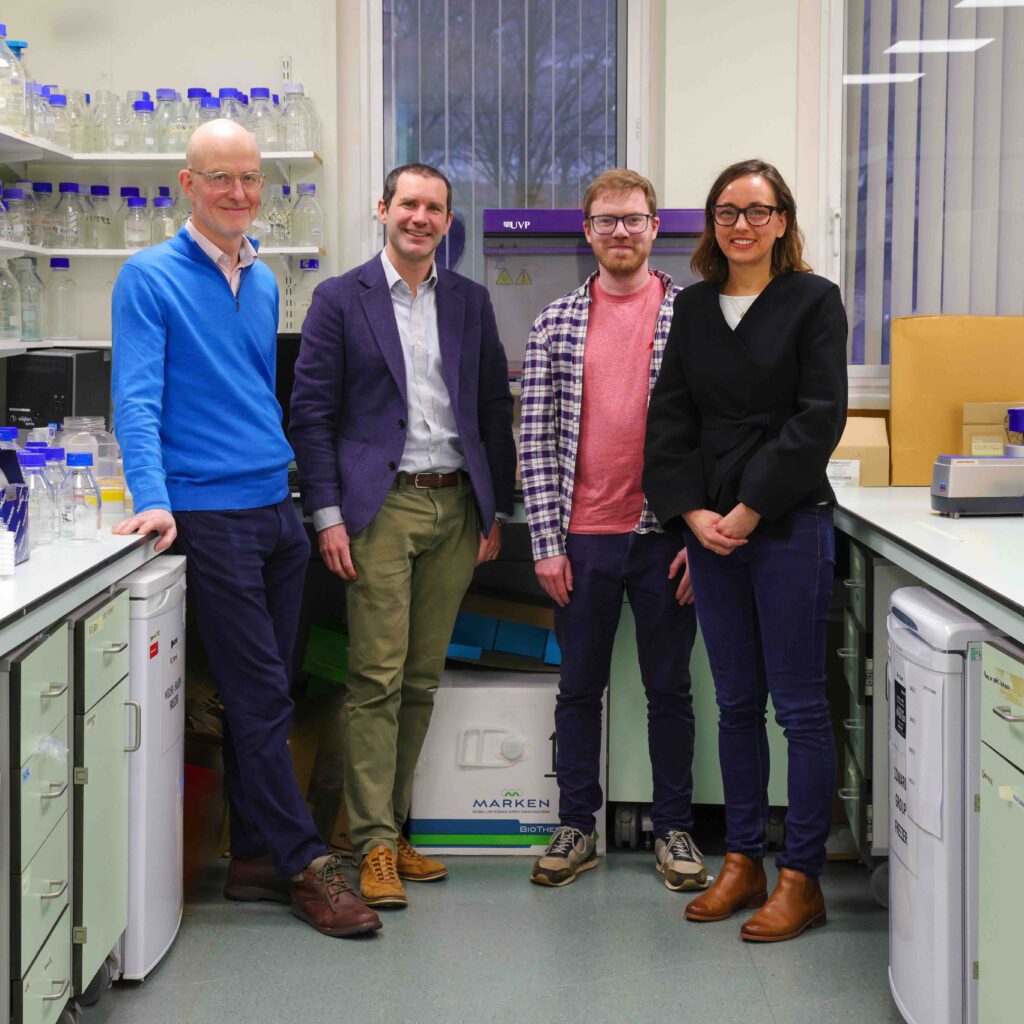
Dimension, which works from lab space at Bristol’s Science Creates, is a University of Bristol spinout built on work by two of the city’s kidney specialists, Professor Simon Satchell and Dr Matthew Butler. Scott brings expertise in biosensors and diagnostic test development to the business alongside co-founder Dr Ulrike Gorochowski.
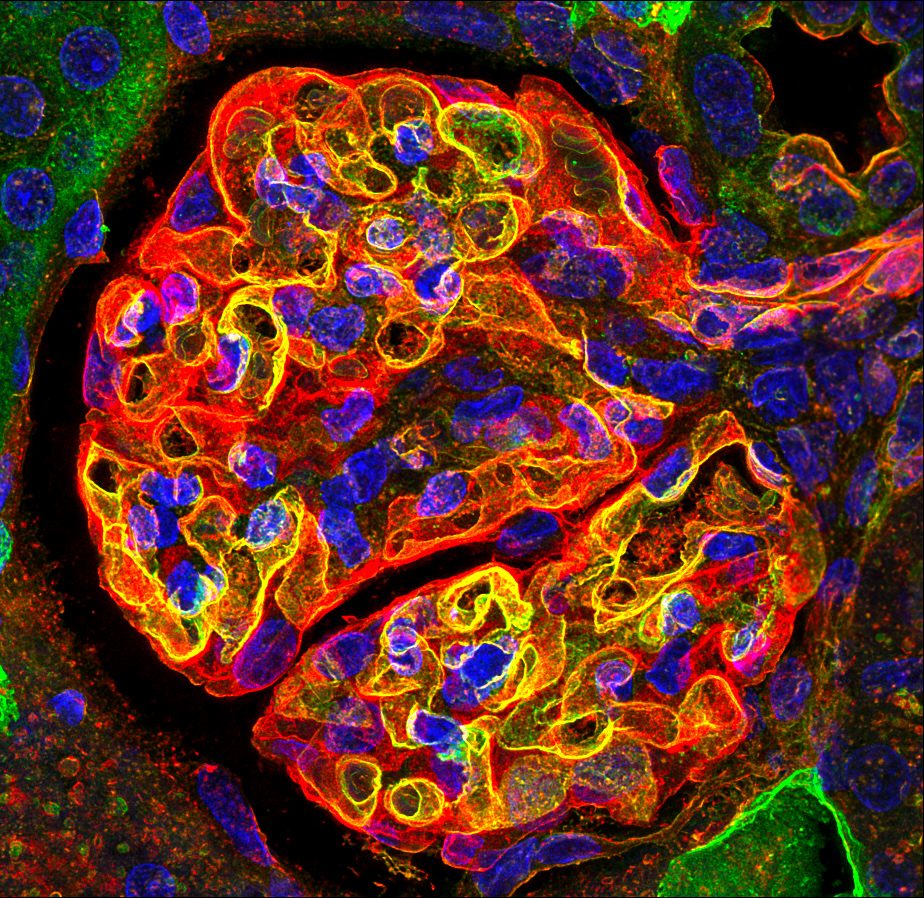
Both Satchell and Butler split their time between seeing patients at Bristol NHS Foundation Trust and running research in the university’s Bristol Renal group. For more than 20 years they have studied the glycocalyx, a sugar-rich coating that lines every blood vessel in the body. It controls what passes through the vessel wall, and it is one of the first things to break down when small vessels are damaged. Until recently, measuring it in a patient meant a tissue biopsy and specialist microscopy.
But in May, the pair published a paper in Nature Communications showing that red blood cells carry the same coating. They pick it up through constant contact with vessel walls, and it reflects the condition of the vessels they have passed through. It was a breakthrough moment.
“If you can measure the structure on your red blood cells, which is what we do, you can report on the same signatures in your blood vessels,” says Scott.
In other words, a normal blood test could show whether your tiniest blood vessels are damaged, with no need to cut out a tissue sample or use special scans. As red blood cells travel round the body, they pick up a trace of the vessels they pass through. Read that trace, and you can tell how healthy those vessels are.
“A lot of microvascular damage is systemic,” says Scott. “If it’s happening in one part of the body, it’s also probably happening in another.”
The same damage plays a part in heart disease, dementia and sepsis.
“People know microvascular damage is a big problem,” he says, “but because there’s no way of easily monitoring these blood vessels, there’s not really much that can be done about it.”
The university has patented the method and licensed it to Dimension, which plans further filings as it develops the test.
Given the background of the researchers, the company is initially focused on kidney health. Dimension officially launched in September with more than £700,000. Of that, £490,000 came from Kidney Research UK, the university, local angel investors and the KQ Labs accelerator at the Francis Crick Institute. There was a further £215,000 in Innovate UK grants.
Scott expects to reach the next milestones within a year, then raise again, but recognises that will not be easy.
“New diagnostic technologies face a challenging path to market,” he says. “But they’re also absolutely essential to move science and medicine forward, and to get treatments to patients early, and so we urgently need diagnostic innovation. There really isn’t a current way of solving the challenge we’re trying to solve.”
Using technology to prevent sickness is, to be fair, on the government’s radar. However, the UK’s 10 Year Health Plan, published in 2025, while committing the NHS to moving from treating sickness to preventing it, did not include kidney disease. The plan’s new service frameworks went to cardiovascular disease, severe mental illness, and frailty and dementia. Ministers said in June that it could feature in a later wave. Since then, the government has changed leader, and kidney charities have written to the new Health Secretary, Yvette Cooper, asking for a dedicated framework.
Scott remains confident that a framework will come, while the company still has work to do before the test reaches clinics. Dimension’s short-term focus is on delivering the technology to R&D teams in academia and industry, before ultimately targeting the clinic.
“Step one: get it adopted by R&D labs,” says Scott. “Step two, we want this to be used in the clinic.”
What should help Dimension work towards these milestones is the environment in Bristol. Two researchers from the university have recently joined the team and the Science Creates labs are proving “an invaluable space.” With the new Temple Quarter Enterprise Campus just down the road, the entrepreneurial ecosystem around Dimension is thriving.
That should help when Dimension Biotechnologies goes back to investors next year, and offers one small answer to the science minister Chris McDonald’s recent complaint that the UK is “choking” on its failure to commercialise scientific research.
Working as a technology journalist and writer since 1989, Marc has written for a wide range of titles on technology, business, education, politics and sustainability, with work appearing in The Guardian, The Register, New Statesman, Computer Weekly and many more.