
Artificial Intelligence
Future Telecoms
Quantum
Wise words and waggishness… September 2026
Reading time: 2 mins
Identifying how to combine quantum, AI, and classical computing could be key to future drug discovery

“We are still at the age of approximation,” says Bijoy Sagar, chief information and digital transformation officer at Bayer AG. “We have not properly modelled what is really happening inside a cell.”
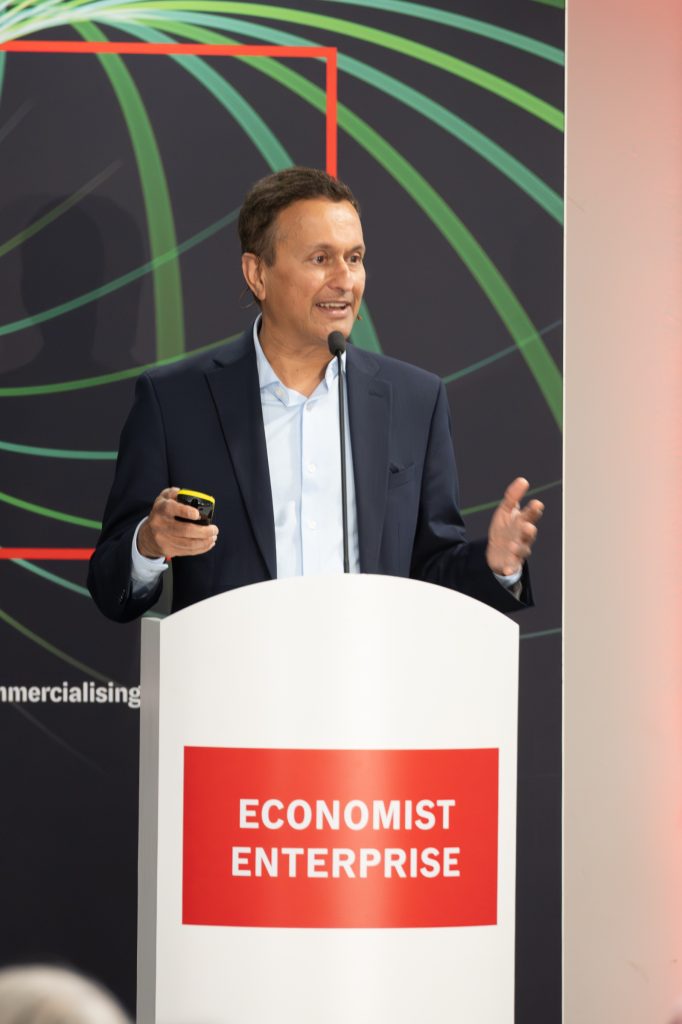
Sagar was speaking at The Economist’s Commercialising Quantum Global event in London recently, about where and how quantum computing can make a difference in drug discovery, if at all. Classical computing, he says, cannot accurately model what happens inside a cell, how molecules behave, how they bind, how proteins fold. The cell operates according to quantum mechanical principles and therefore quantum computing, Sagar argues, is the only tool capable of modelling it directly.
It could be an important breakthrough for the technology and for the pharma industry, if and when it happens. Nine out of ten drug candidates that enter clinical trials never reach patients. The main reasons, according to a 2022 analysis published in Acta Pharmaceutica Sinica B, are lack of clinical efficacy and unmanageable toxicity, both problems that better molecular modelling could directly reduce.
So, what are the chances? Can quantum computing make a big impact on the industry and advance one of its most difficult challenges?
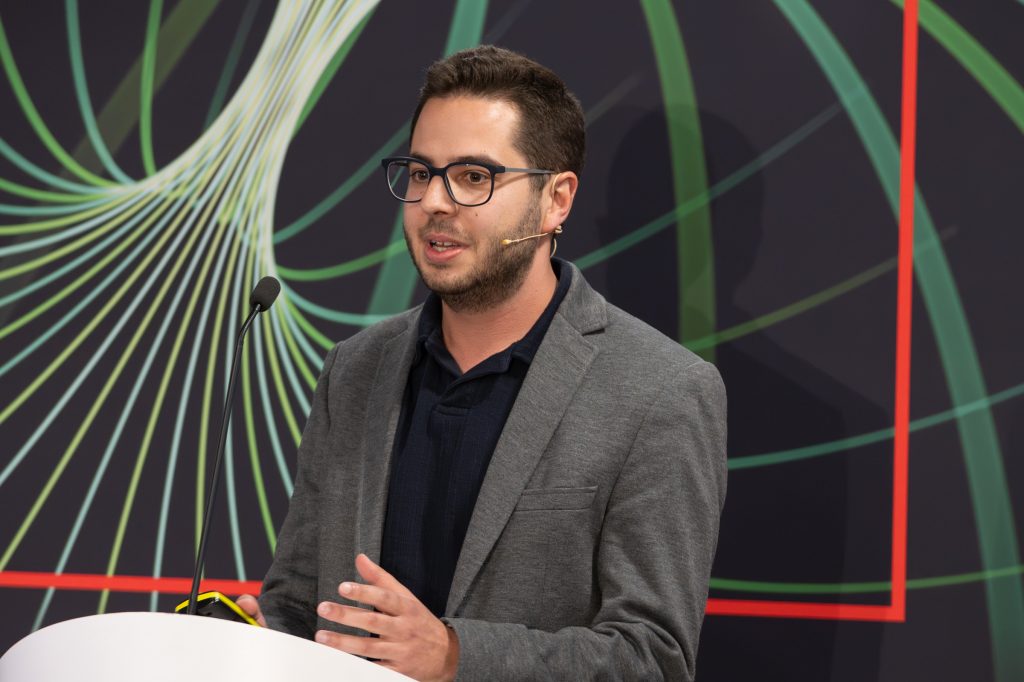
Michael Streif, quantum computing scientist at Boehringer Ingelheim, also spoke at the event. In a 2022 paper produced with Google Quantum AI and QSimulate, his team tried to calculate the cost of using a quantum computer to model a single configuration of the CYP450 enzyme, a molecule that plays a central role in how the body processes drugs. To solve just one configuration required an estimated 4 million qubits and three days of computing time. The problem is that drug discovery requires that same calculation to be run millions of times over.
By 2025, algorithmic improvements developed with PsiQuantum had cut that runtime to under an hour. Genuine progress – but multiply one hour by millions of calculations and the total still remains unworkable. The target is seconds, possibly milliseconds.
There is also the question of scope. Most molecules in pharmaceutical research can already be modelled using classical computing. The CYP450 is an exception, one of the few that classical machines genuinely struggle with. Until quantum can deliver an advantage across a much wider class of molecules, its use in drug discovery remains narrow. Streif says Boehringer has not yet found a route there.
April 2026’s Wellcome Leap Q4Bio results gave the clearest public picture yet. The programme launched in 2023 with 12 teams sharing $40 million, requiring finalists to demonstrate algorithms on real hardware. Five of six Phase III finalists used IBM quantum systems. The $2 million prize went to Algorithmiq, with Cleveland Clinic and IBM, for quantum simulation of photodynamic therapy in cancer treatment
Ashley Montanaro, co-founder of Phasecraft and professor of quantum computation at the University of Bristol, led another finalist team working on a currently untreatable neuromuscular condition. His verdict? When Q4Bio launched, it was far from obvious any of this would work. It is a milestone, not a solution.
The quantum computing in drug discovery market has been valued at $318 million in 2025, projected to reach $1.8 billion by 2035. That is investment and infrastructure spend. It does not reflect quantum-derived drugs reaching patients.
Sagar believes the industry is holding itself back with two flawed assumptions. The first is that pharma companies already have too much data. In reality, the volume required to model drug interactions at the scale quantum computing demands is far beyond what any single organisation holds. The second is that proprietary data is uniquely valuable and must be protected at all costs. Up to a point, yes but the problem is too big to solve alone. Progress will require data sharing across organisations, something the industry has consistently resisted.
Quantum and AI cannot fix that. The barriers around patient data are regulatory and political. That is a separate problem, and one that no amount of computing power will solve.
The industry is not waiting. It cannot afford to. At Bristol, Dr Thom Sharp’s team secured £850,000 in November 2025 through Evotec’s beLAB1407 partnership to develop precision peptides targeting the human complement system. This is structure-guided work aimed at autoimmune diseases that current broad-spectrum treatments handle poorly. It is exactly the kind of research that quantum modelling could eventually accelerate.
Both Sagar and Streif arrive at the same point independently. Quantum does not replace classical computing or AI; it augments them for problems neither can solve alone. The orchestration question, how to allocate work efficiently across all three, remains unresolved.
Working as a technology journalist and writer since 1989, Marc has written for a wide range of titles on technology, business, education, politics and sustainability, with work appearing in The Guardian, The Register, New Statesman, Computer Weekly and many more.