
Artificial Intelligence
Future Telecoms
Life Sciences
Quantum
Robotics
Latest tech trends: what McKinsey says about quantum, robotics, connectivity and life sciences
Reading time: 6 mins
The UK probiotics industry is worth over £1bn but for Dr Jenny Bailey Cooper, there was a missing piece. She spent years chasing a gut-health solution but finally had her eureka moment

When Dr Jenny Bailey Cooper got talking to a microbiologist in the corridors of the University of Bristol, she had no idea the chance meeting would lead to her becoming an entrepreneur.
Dr Tristan Cogan, now her co-founder at spinout Ferryx, was working on the gut microbiome. Bailey Cooper, an immunologist, was working on how the body responds to it. Call it serendipity or just curiosity, but their conversations about why people spend so heavily on probiotics with little evidence they work during a gut flare-up, led to what Bailey Cooper calls a “side hustle”.
She had not set out to work on people, or even to run a business. As a teenager she wanted to be a vet, and spent three years in a veterinary practice before deciding it wasn’t for her. Her degree, veterinary pathogenesis, was essentially biology. Her PhD, on how immunity develops in the gut, was worked out in pigs. By the time that corridor conversation happened she was doing a postdoc on inflammatory bowel disease.
The side hustle ran for years. It was unfunded, squeezed between full-time jobs and paid for out of odd bits of consultancy money. She also became a mother somewhere in the middle of it, but despite the slow progress both founders held onto their convictions. Bailey Cooper and Cogan screened strain after strain until one day there was a breakthrough.
“We found something that actually worked in our laboratory tests,” says Bailey Cooper. “It was reducing inflammation in our models,” she says, adding that it was doing it “in a way that a conventional probiotic shouldn’t be able to do.”
It was a eureka moment.
Knowing the science was one thing, but, as Bailey Cooper admits, “we had no idea about commercialisation, about IP protection, anything like that.”
The University of Bristol’s technology transfer office walked them through patents and starting a business, so Ferryx became a University of Bristol spinout in September 2019.
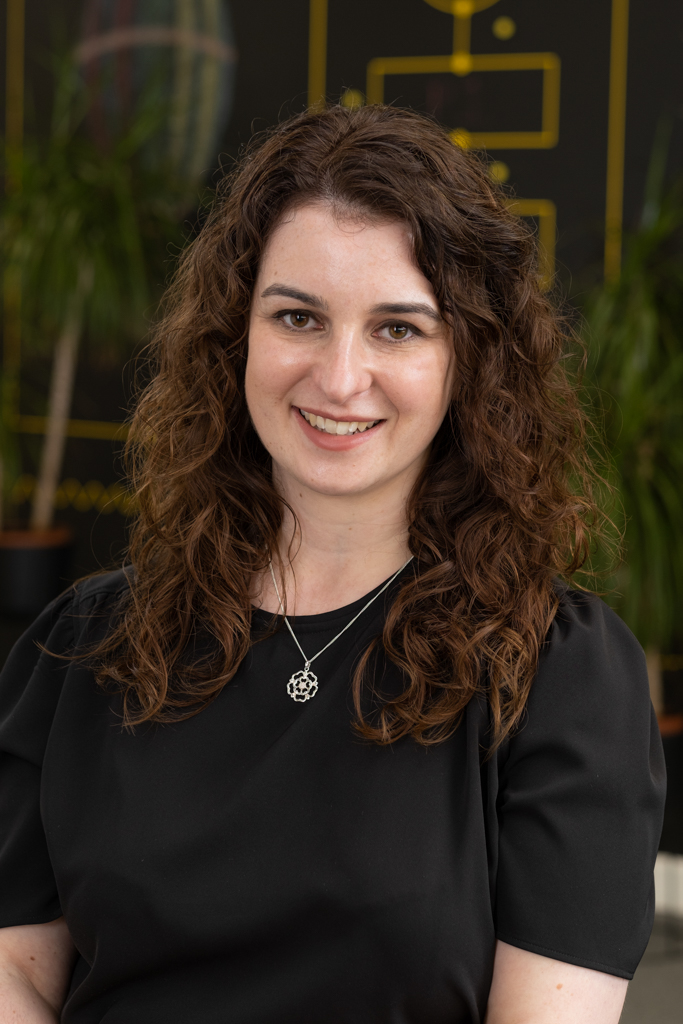
The plan was to bootstrap on a licensing deal, but after months of work the deal collapsed, “through no fault of our own,” says Bailey Cooper. They regrouped around raising investment.
“The university supported us with that. We were also linked in with Future Space. At that point, we’d rented office space at Future Space, so they were really helpful as well, helping us to write a pitch deck and things like that. I didn’t really know what I was doing on that side of things because that was never part of the strategy.”
They had booked an investor pitch for 25 March 2020. Two days before, on 23 March, the country locked down because of Covid-19 and the meeting was cancelled.
“We’ve got a great idea, we’ve got no funds, the world’s closed down. Now what do we do?” says Bailey Cooper.
But it was during a lockdown webinar where she talked mostly about the human product that they had some luck. She had a slide on early results in chickens and a global animal feed company saw it and asked to run a trial. That trial became a deal, and the deal paid the bills.
“That deal bootstrapped us,” says Bailey Cooper. “We were able to start manufacturing and pursue the human route because the deal funded us for the veterinary side of things.”
The UK’s probiotics market is worth around £1.47bn, according to Mordor Intelligence. For Bailey Cooper and Cogan that meant predominantly yoghurt-based drinks, so they embarked on a fact-finding mission. A visit to Yeo Valley’s headquarters south of Bristol gave them an understanding of what making a probiotic drink would mean, but this all came to an abrupt halt after some market research.
“The overwhelming response was no, we don’t really want that,” says Bailey Cooper. “Some didn’t like the idea that it had to be kept in the fridge. Others said they didn’t like the taste, and some had to avoid dairy because it could exacerbate their IBS symptoms.”
Customers wanted a tablet they could swallow and forget. This completely changed their thinking, so they started looking at manufacturing a capsule instead.
“It’s all very good sitting in the lab saying this is cool, this is really neat,” she says. “But it’s not a product until you find out if someone actually wants it and is willing to pay for it.”
The next challenge was how to market and sell the product, which they decided to call Ferrocalm. As the Mordor Intelligence report found, probiotic drinks were the biggest UK segment of the total probiotics market at 56.83% in 2025. Gut health is a growing market but it is also crowded, especially when you browse the aisles of high-street chains such as Holland & Barrett.
This led to hiring a fractional marketing director, a digital lead and a healthcare sales specialist. The aim was to lead with the science to show that “this isn’t something that’s been cooked up in someone’s kitchen and led by influencers,” she says. “It’s been developed by gut health experts at a university.”
Today, Ferrocalm is enjoying a growing reputation. Sold direct through its own website and, more recently, through Holland & Barrett and Debenhams online, Bailey Cooper reports sales growing about 30% month on month. Internal trial data is also showing most users’ symptoms improving within eight weeks. The company is now hoping to raise more money to help launch more products and sell abroad.
It’s the next stage in a start-up that, like many start-ups, has had its fair share of ups and downs. And this is where Bailey Cooper has nothing but good things to say about the support she has received from the Bristol ecosystem. She talks about the value of being a part of Enterprising Women and SETsquared, as well as the help she receives from the University of Bristol’s spinout support teams and the region’s health-tech cluster as a whole – a region now ranked highest for spinout creation outside of the “Golden Triangle”.
“I know I can just pick up the phone to any number of people and say, ‘Hey, we’re having this problem. Have you had this before? How did you tackle it? Who do you think I should be speaking to?’ And there’s no competition between us. Everyone just is really helpful and supportive, and I think that’s true of Bristol as a whole.”
For Bailey Cooper, it’s also about raising awareness.
“I’m always up for conversations about gut health,” she says. Of course she is. That’s how she ended up starting a business after a random conversation in a corridor. But it’s the science that always underpins her thinking, and that’s where she believes she can help to differentiate.
“We are showing the consumer that just because your grandma used some remedy 50 years ago, and says it’s great, it doesn’t mean that it’s the right thing, you know,” says Bailey Cooper. “Things have moved on. Science is really important, and I think anything that brings that into people’s everyday conversations is brilliant.”
Working as a technology journalist and writer since 1989, Marc has written for a wide range of titles on technology, business, education, politics and sustainability, with work appearing in The Guardian, The Register, New Statesman, Computer Weekly and many more.